

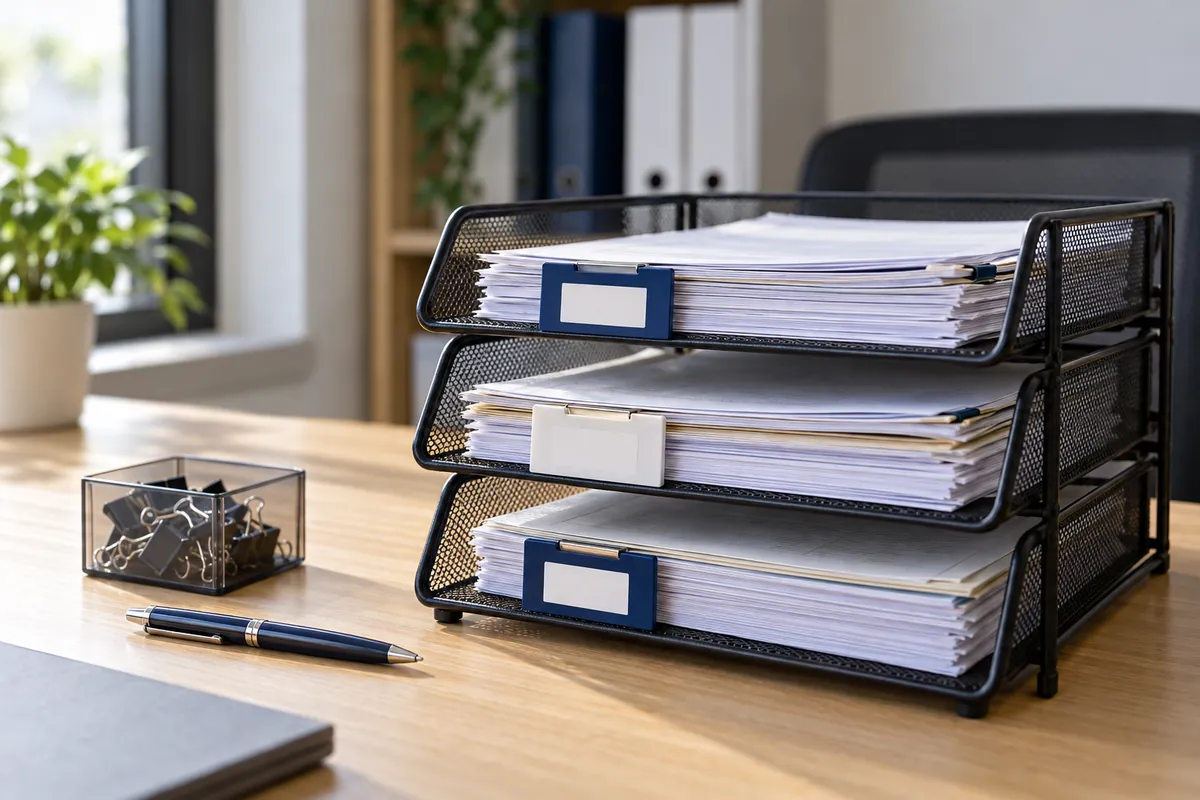
Clear books start with documents kept steadily, not with the accounting software. A few simple habits help the accountant work faster, ask fewer follow-up questions, and help you see how the business is doing each month.
What to gather
- Purchase and sales invoices for the month.
- Bank statements of the business account.
- Contracts and addenda newly signed or changed.
- Payment vouchers for expenses with no invoice attached, with a note of the reason.
- Payroll and related records, if you have employees.
Habits worth building
- Set a fixed schedule. For example, send documents on a set day each month so the accountant knows when the data arrives.
- Keep business and personal money apart. Use an account of its own for the business. Mixed spending is a common reason books get messy.
- Photograph or scan on receipt. Paper invoices are easily lost; a clear copy sent the same day is safer.
- Name files by a rule. For example: year-month-day, counterparty, subject. Finding them again becomes much quicker.
- Note the unclear items. One line of explanation when you spend the money helps the accountant post it correctly.
- Flag unusual events early. Large contracts, staff changes and major purchases are best mentioned before the documents arrive.
How to send them
Choose one place to send and store documents, and agree on it with your accountant. When you use our accounting service, the specific way to prepare is explained in the Understand step, to suit your business.